
Funerals
What Is a Green Funeral? A Guide to Eco-Friendly Options
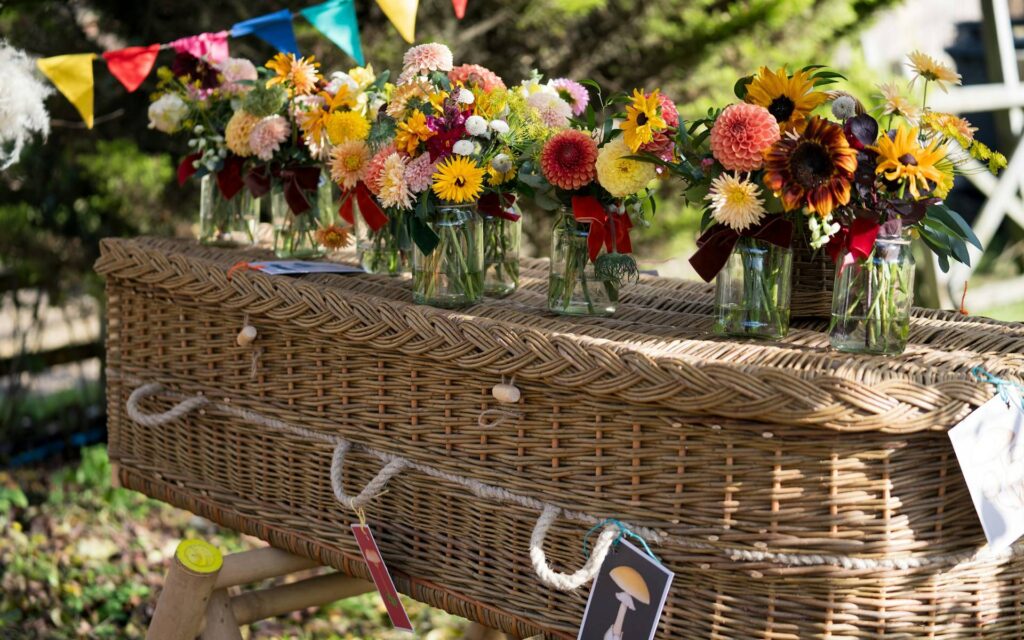
More families across the UK are asking about greener ways to say goodbye. A green funeral, sometimes called an eco-funeral or natural funeral, focuses on reducing the environmental impact of a funeral, from the materials used to the choice of burial site. For many people, it also feels like a more personal and peaceful way to be laid to rest, closer to nature rather than within a conventional cemetery setting.
This guide explains what a green funeral involves and the main options worth considering, so you can talk through what matters most to you and your family. As an independent, family-run funeral director serving Winscombe and the wider North Somerset area, C V Gower is happy to talk through these options at whatever pace feels right for you.
What is a green funeral?
A green funeral aims to reduce the environmental footprint of a funeral service. That might mean choosing a biodegradable coffin, being buried in a natural burial ground rather than a conventional cemetery, avoiding embalming, or simply keeping the service simpler and more low-key.
There is no single definition or fixed set of rules to follow. It is really a spectrum of choices, and most families choose the elements that feel right for them rather than adopting every option at once.
Why more families are choosing a greener funeral
Interest in eco-friendly funerals has grown steadily in the UK in recent years. Some families are motivated by environmental concerns and want their final act to reflect the values held in life. Others are drawn to the simplicity and calm of a woodland or meadow setting, away from the formality of a traditional cemetery.
Cost can also be a factor, as natural burial grounds and simpler services are often less expensive than a traditional funeral with a headstone and ongoing grave maintenance. Whatever the reason, a green funeral can be arranged with just as much care and dignity as any other type of service.
Natural and woodland burial explained
Natural burial, also known as woodland or green burial, takes place in a dedicated natural burial ground rather than a conventional cemetery. These sites are managed to encourage wildlife and native planting, and graves are typically marked with a tree, a wildflower meadow marker or a simple wooden plaque rather than a traditional headstone.
Over time, many natural burial grounds mature into woodland or meadow, so the site becomes a living memorial rather than a static grave that needs upkeep. There are now a good number of natural burial grounds across the UK, and rules on planting, memorials and what can be left at the graveside vary from site to site, so it is always worth checking with the individual ground.
Biodegradable coffins and eco-friendly materials
One of the simplest ways to make a funeral greener is through the choice of coffin. Biodegradable coffins are typically made from materials such as willow, bamboo, seagrass, cardboard or unvarnished wood, all of which break down naturally over time and avoid the metals, plastics and varnishes used in some traditional coffins.
Many families find these coffins have a warmer, more natural look, and they can still be personalised with flowers, fabric or handwritten messages. C V Gower can talk you through the coffin and casket options available and help you choose one that suits the type of burial or cremation you have planned.
Cremation and greener alternatives
Cremation remains the most common choice of funeral in the UK, and there are ways to make it a little greener, such as choosing a biodegradable coffin, or scattering or interring ashes in a way that supports nature, for example at a memorial woodland or in a biodegradable urn.
Some families are also exploring newer alternatives such as resomation, or water cremation, although availability of this option is currently limited in the UK. It is worth discussing what is realistically available in your area with your funeral director, so you can make an informed choice.
What does a green funeral cost in the UK?
Costs vary depending on the burial ground, coffin choice and type of service, in the same way they do for a traditional funeral. Natural burial can often work out similar to, or sometimes less than, a traditional burial, partly because there is no need for a headstone or ongoing grave maintenance, and biodegradable coffins are available at a range of price points too.
As with any funeral, it is worth asking for a clear, itemised breakdown of costs from the outset, so there are no surprises later.
Talking through your options with C V Gower
Choosing a green funeral is a deeply personal decision, and there is no need to get everything “right” straightaway. The team at C V Gower has supported families across Winscombe and the wider North Somerset area for many years, and we are happy to talk openly about natural burial, coffin choices and what is practical in your area, alongside more traditional options, so you can find an approach that feels true to your loved one.
If you would like to talk through what a green funeral might involve for your family, please get in touch with C V Gower at any time.
How to Choose the Right Funeral Director for Your Family
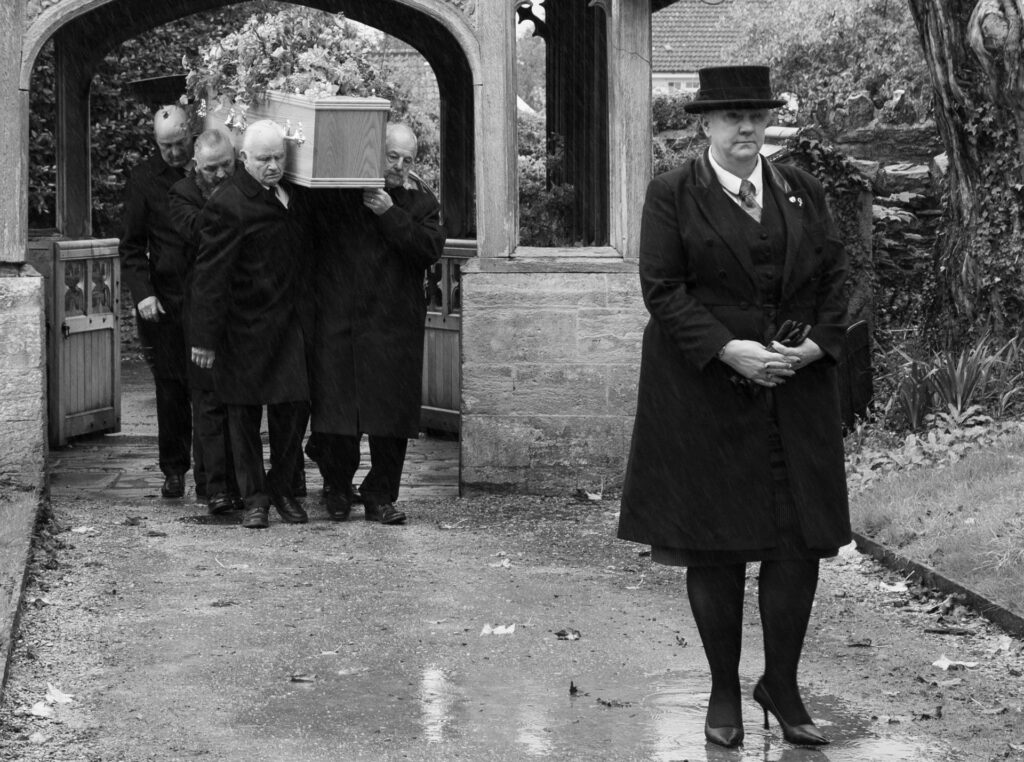
Choosing a funeral director is one of the more daunting decisions a family faces, often at the hardest of times and with little experience to draw on. The right choice can make a genuine difference, easing the practical burden and giving you the space to focus on what matters. Taking a little time to understand what to look for helps you find someone you can trust to care for your loved one and support your family with warmth and respect.
It is worth remembering that you are entitled to choose, and to take your time doing so, even when arrangements feel urgent. A good funeral director will never rush you, and understanding what sets a caring, professional firm apart makes the decision far less overwhelming.
Why choosing the right funeral director matters
A funeral director does far more than arrange a service. They guide you through the decisions, handle the practical and legal details, and make sure the day reflects the person you are saying goodbye to. Much of their work happens quietly in the background, from caring for your loved one to coordinating with venues, officiants and other services on your behalf.
Because so much rests on their care and judgement, finding someone who listens and treats your family as individuals is every bit as important as the services they offer. The right firm becomes a steady, reassuring presence through an emotional time, and that support is hard to put a price on.
What to look for in a funeral director
Every family is different, but a few qualities tend to set a good funeral director apart. As you consider your options, it is worth weighing up:
- Reputation and recommendations: word of mouth, online reviews and a trusted local presence say a great deal about the care they provide.
- Range of services: burial, cremation, religious and non-religious services and more personal touches, so the funeral can be shaped around your wishes.
- Transparent pricing: clear, itemised costs and a willingness to talk openly about options, with no pressure to spend more than you want to.
- A personal, compassionate approach: genuine listening, gentle guidance and the patience to let your family lead.
- Local knowledge: familiarity with nearby venues, crematoria and community traditions, which makes everything run more smoothly.
Taken together, these qualities tell you whether a firm will treat your family with the care and honesty you deserve. Reputation and a personal approach often matter most, because they speak directly to how you will be looked after when it counts.
Questions worth asking
A short conversation often tells you a lot. Most families find it helpful to ask a few simple questions before deciding:
- Availability: are they on hand to support you when you need them, including out of hours?
- Flexibility: how do they handle specific or unusual requests and can they tailor a service to your family?
- Costs: what is included and how are additional costs explained and agreed?
There is no such thing as a question that is too small. A caring funeral director will welcome them and answer honestly and clearly, and the way they respond often tells you as much as the answers themselves. If you feel listened to and unhurried, that is usually a good sign.
Planning ahead or arranging at short notice
Some families plan ahead with a pre-paid plan or simply by noting wishes in advance, which can ease both the emotional and financial pressure later on. Planning ahead also gives you the chance to talk things through calmly and make sure your wishes are understood, rather than leaving difficult decisions to others at a painful time.
Others need to make arrangements at short notice and with little time to prepare, which is entirely normal and nothing to worry about. A good funeral director is comfortable with both, meeting you where you are and adapting to what your family needs, whether you have months to plan or only a few days.
Red flags to watch for
Just as there are signs of a caring funeral director, there are a few warning signs worth heeding: a lack of transparency around costs, poor or rushed communication, or any pressure to upgrade and spend more than feels right. You should never feel hurried or unheard, or made to feel that a more expensive option is the only respectful one. The right funeral director will be patient, open and entirely led by your wishes.
Support that continues after the funeral
The support of a good funeral director also continues beyond the day itself, from bereavement guidance to help with the administration that follows a death. Knowing that someone is there to answer questions in the weeks afterwards can be a real comfort, and it is worth asking what aftercare a firm provides.
As a family-run funeral director with deep roots in the community, C V Gower has supported local families for generations with exactly this kind of personal, transparent and compassionate care. If you would value an informal, no-obligation conversation about how they can help, the team is always glad to listen, whether you are planning ahead or facing a more immediate loss.
Registering a Death in the UK: Everything You Need to Know

Losing someone close to you is never easy, and dealing with practical arrangements can feel overwhelming at an already difficult time. Registering a death is an important legal step, but understanding what’s involved can help make the process feel more manageable.
This guide explains when and how to register a death in the UK, what information you will need, and what happens afterwards, so you can approach this responsibility with clarity and confidence.
When must a death be registered?
In most cases, a death must be registered within a specific timeframe, depending on where it occurred. In England, Wales and Northern Ireland within 5 days, and in Scotland, 8 days.
These timeframes can sometimes be extended if the death has been referred to a coroner or procurator fiscal. This might happen if the cause of death is unknown, sudden, or requires further investigation. In these situations, you will usually be advised on when registration can take place.
Who can register a death?
The responsibility of registering a death typically falls to someone close to the deceased or involved in their care. This may include:
- A relative of the deceased
- Someone who was present at the death
- A person arranging the funeral
- A representative from the hospital, care home, or institution
If you are unsure whether you are the right person to register the death, the local register office can provide guidance.
Where to register the death
A death must be registered at the register office in the district where the death occurred. Many register offices now offer appointment booking online or by phone, which can make arranging a suitable time easier.
In some cases, you may be able to start the process remotely, depending on local services, but this varies by area.
Documents you may need
When attending the appointment, you will usually need the Medical Certificate of Cause of Death (MCCD), which is issued by a doctor. In addition, it can be helpful to bring:
- The deceased’s NHS number, if available
- Birth certificate
- Marriage or civil partnership certificate
- Proof of address
Not all of these documents are essential, so do not worry if you cannot locate everything. The registrar can still proceed with the information you have.
Information you will need to provide
During the registration, you will be asked for key details about the deceased. This typically includes:
- Full name and any previous names
- Date and place of birth
- Last address
- Occupation
- Marital or civil partnership status
- Name and occupation of a spouse or partner (if applicable)
You may also be asked for additional information to ensure records are accurate and complete.
The Tell Us Once service is designed to simplify administrative tasks by informing several government organisations at the same time. With one submission, you can notify:
- Department for Work and Pensions (DWP)
- HM Revenue and Customs (HMRC)
- DVLA
- Passport Office
This can reduce the number of separate calls or forms you need to complete during an already difficult period.
What you receive after registration
Once the death has been registered, you will receive several important documents. You can buy copies of the death certificate, which are often needed when dealing with banks, insurance providers and other organisations. It is usually worth getting several copies at the time of registration, as this can make the administrative process easier.
You will also be given a certificate for burial or cremation, often called the ‘green form’. This is the document that allows the funeral arrangements to go ahead.
You may also receive a Tell Us Once reference number. This lets you use the government’s Tell Us Once service, which notifies multiple departments and public bodies about the death on your behalf.
Special circumstances to be aware of
Some situations may involve slightly different processes. Coroner involvement can delay the registration process, as the death may not be registered until any necessary investigations have been completed. If someone dies abroad, the death will need to be registered in the country where it happened. In some cases, you may also need to register the death in the UK.
Stillbirths are registered separately from other deaths and usually need to be registered within 42 days in England and Wales.
If you are dealing with any of these circumstances, additional guidance will be provided by the relevant authorities.
Support when you need it most
Registering a death is just one part of a wider process that can feel unfamiliar and emotional. Having the right support can make a meaningful difference, both practically and personally.
At C V Gower, we understand how difficult this time can be. As a family-run funeral director with decades of experience, we offer compassionate guidance at every stage, from registering a death to arranging a meaningful farewell. We can help you navigate the paperwork, liaise with the relevant services, and ensure everything is handled with care and sensitivity.
If you need support or advice, you are not expected to manage it all alone.
What to Do When a Loved One Dies: First Steps to Take

Losing someone close to you can feel overwhelming, especially in the first few hours and days. Alongside the emotional impact, there are practical steps that need to be taken, often quite quickly. Knowing what to do can help bring a small sense of clarity during a very difficult time.
This guide walks you through the key actions to take after a death in the UK, with simple, practical advice to help you feel more prepared.
What to do immediately after someone dies
What happens next depends on where the death occurs. In most cases, a medical professional will need to confirm the death before anything else can happen. If the death was expected, this process is usually straightforward. If it was sudden or unexplained, there may be additional steps involving a coroner.
Once the death has been confirmed, you can begin notifying close family members and thinking about the next practical steps.
What happens if someone dies at home
If someone dies at home and the death was expected, you should contact their GP or call 111. A doctor or qualified healthcare professional will confirm the death and begin the process of issuing a Medical Certificate of Cause of Death.
If the death was unexpected, you should call 999. Emergency services will attend and may involve the coroner to determine the cause of death.
In either case, once the death has been formally confirmed, you can contact a funeral director when you feel ready. They can arrange for the person to be taken into their care and guide you through what happens next.
What happens if someone dies in hospital or a care home
If the death occurs in hospital or a care home, the staff will take care of confirming the death and will explain the next steps to you. They will usually arrange for the Medical Certificate of Cause of Death and advise you on how to collect it or have it sent to the relevant register office. They can also support you with contacting a funeral director.
Although much of the process is handled for you, it can still feel unfamiliar, so do not hesitate to ask questions or take your time before making decisions.
What happens if someone dies abroad
If a loved one dies abroad, the process can be more complex. You will usually need to register the death in the country where it occurred and obtain a local death certificate.
You should also contact the UK Foreign, Commonwealth and Development Office for guidance. They can help you understand how to bring your loved one back to the UK and what documentation is required. A UK-based funeral director with experience in repatriation can also support you through this process.
How to register a death in the UK
In England and Wales, a death must normally be registered within five days, although this may be delayed if the coroner is involved.
You will need to register the death at the local register office for the area where the person died. In many areas, this is done by appointment. During the registration, you will be issued with the official death certificate and a certificate for burial or cremation, which allows the funeral to go ahead.
Documents you may need
When registering a death, it helps to have as much information as possible about the person who has died. This may include:
- Their full name, address, and date of birth
- Their NHS number, if available
- Details of their occupation
- Information about a spouse or civil partner
- Their birth certificate, marriage certificate, or passport
Not all documents are essential, but having them can make the process smoother. It is also a good idea to request multiple copies of the death certificate at this stage. Many organisations will require an official copy, and ordering them later can take more time.
When to contact a funeral director
You can contact a funeral director at any point after the death has been confirmed. Many families choose to do this early on, as it can provide reassurance and practical guidance.
A funeral director does more than arrange the funeral itself. They can help you understand the steps ahead, liaise with medical professionals, and support you with the necessary paperwork. As a family-run funeral director with many years of experience, C V Gower supports local families from the earliest stages after a loss. Our team can talk you through what to expect, answer any questions, and help you feel more confident about the decisions ahead.
What else needs to be sorted in the first few days
Alongside registering the death and beginning funeral arrangements, there are several practical matters to take care of in the days that follow.
You may need to inform:
- Banks and building societies
- Pension providers
- Utility companies
- Insurance providers
- Government departments such as HMRC or the Department for Work and Pensions
The Tell Us Once service can make this easier. It allows you to report a death to multiple government organisations in one step, reducing the amount of paperwork and repetition involved.
It is important to remember that these tasks do not all need to be completed immediately. Taking them one step at a time can help make things feel more manageable.
What happens if the coroner is involved
If a death is sudden, unexplained, or occurs in certain circumstances, it may be referred to the coroner. The coroner may decide that a post-mortem examination is needed to establish the cause of death. In some cases, an inquest may also be required.
This can delay the registration of the death and the funeral arrangements. However, you will be kept informed throughout the process, and support is available to help you understand what is happening.
Moving forward, one step at a time
The days after losing a loved one can feel uncertain and emotionally heavy. While there are practical steps to take, it is equally important to give yourself time and space to process what has happened.
Having the right support can make a real difference. C V Gower is here to guide families through each stage with care and clarity, offering both practical help and a steady, compassionate presence when it is needed most.
How to Announce a Death to Friends & Family

Losing someone you love is one of life’s most difficult experiences. In the early hours and days after a death, there can be many practical things to think about – and one of the hardest is letting others know what has happened.
Sharing the news of a death can feel overwhelming. You may be unsure what to say, who should be told first, or how widely the information should be shared. During such an emotional time, it’s perfectly natural to feel uncertain.
The good news is that there is no single ‘right’ way to do this. Many families simply take things step by step, sharing the news gently and thoughtfully with those closest to them before informing the wider community.
This guide explores some practical and compassionate ways to announce a death to friends, family, and the wider community.
First Steps After a Death
Before announcements are made publicly, families usually take some time to process what has happened and focus on immediate practical matters.
In many cases, the first steps after a death include contacting a doctor or relevant authorities to confirm the death, informing close family members and beginning conversations about funeral arrangements.
It’s important to remember that you do not need to inform everyone immediately. Many families prefer to first notify the people who were closest to the person who has died, allowing them to hear the news privately rather than through social media or public announcements.
Taking a little time to organise how and when the news will be shared can help prevent misunderstandings and ensure the most important people hear the news in a thoughtful way.
Informing Immediate Family First
When someone dies, it is generally considered best to tell immediate family members personally whenever possible.
This may include:
- A spouse or partner
- Children or stepchildren
- Parents
- Siblings
- Very close relatives
If you can, speaking to these people in person or by phone is often the most compassionate approach. Hearing the news directly from someone they trust can make a difficult moment feel more supportive and personal.
Some families also create a small list of people who should be contacted early on – perhaps close friends or relatives who were particularly important in the person’s life.
If making all of these calls feels too overwhelming, it can help to ask another trusted family member or friend to assist.
Informing Friends and the Wider Circle
Once immediate family and close friends have been informed, you may want to let a wider group of people know.
This might include extended family, friends and neighbours, work colleagues and community or club members.
There are several ways families choose to share this news, and the best option often depends on the size of the community and personal preference. Common methods include:
Phone Calls or Messages
For people who knew the person well, a phone call can feel more personal and respectful. Text messages or WhatsApp may be appropriate for people who are slightly more distant but would still appreciate hearing the news directly.
Letters or Announcement Cards
Some families choose to send announcement cards or letters to relatives and friends. These can be particularly helpful when informing a larger number of people, allowing you to share the news in a thoughtful and consistent way.
Social Media
Social media can help reach a wider network of friends quickly, but it is usually best to post only after close family members have already been informed. Once a message is shared online, it can spread rapidly and may reach people unexpectedly.
Traditional Death Announcements and Newspaper Notices
Many families still choose to publish a formal death notice in a newspaper or online obituary platform.
This is a long-standing tradition that allows the wider community to be informed and provides a respectful public acknowledgement of the person’s life.
A typical death notice may include:
- The person’s full name
- Their age or date of birth
- The date of death
- A short message or tribute
- Details of the funeral service
- Information about flowers or charity donations
Death notices are often brief and focused on essential information rather than a full life story. For many families, these notices also provide a way for people to send condolences, attend the funeral, or share memories.
Finding the Right Words
One of the most challenging parts of announcing a death is choosing the right language.
There is no perfect wording, but messages are usually simple, respectful, and clear. The goal is simply to inform people while honouring the person who has died.
A gentle example might be:
‘It is with great sadness that we share the news that John Smith passed away peacefully on 10 March, surrounded by his family. A much-loved husband, father, and grandfather, John will be deeply missed by all who knew him. Funeral details will be shared soon.’
Many announcements also include details about funeral arrangements, invitations to attend, or information about charitable donations.
Remember that your message does not need to be long or complicated. Often, the most meaningful announcements are the simplest.
Balancing Privacy and Communication
Every family approaches announcements differently. Some prefer to share a lot of information, while others choose to keep details private.
For example, you may decide to keep funeral services private, share only limited information about the circumstances of death or announce the news only within close circles.
There is no expectation to share more than you feel comfortable with. What matters most is that the information is communicated respectfully and in a way that feels right for your family.
How Funeral Directors Can Help
During such a difficult time, many families find comfort in knowing they don’t have to manage everything alone.
Funeral directors can often help with:
- Writing death notices or announcements
- Submitting notices to newspapers
- Publishing online tribute pages
- Ensuring funeral details are communicated clearly
At C V Gower Funeral Directors, we understand how challenging these early days can be. Our team can support you in preparing newspaper notices or online announcements, helping you find the right words while ensuring important information reaches friends, family, and the wider community.
Sometimes, simply having someone experienced guide you through these steps can make a difficult task feel a little more manageable.
A Gentle Reminder During a Difficult Time
Announcing the death of a loved one is never easy. It involves sharing deeply personal news while you are still processing your own grief.
It’s important to remember that there is no perfect way to do it. Many families take things one conversation at a time – telling those closest first, and then gradually informing the wider circle.
If you find this task overwhelming, don’t hesitate to lean on the support of family members, friends, or professional guidance.
At C V Gower Funeral Directors, we are here to support families throughout every step of the funeral journey – including helping you share the news with care, dignity, and compassion.
If you would like guidance with announcements, funeral arrangements, or any aspect of planning a service, our team is always here to help.
Why Funerals Matter: The Psychology of Ritual

When someone we love dies, the world can suddenly feel uncertain and overwhelming. In the midst of grief, many families turn to a funeral or memorial service — a moment to pause, gather, and remember.
While funerals are often viewed as a practical step following a death, they also serve a deeper purpose. Across cultures and throughout history, funeral rituals have helped people process loss, express grief, and support one another.
Understanding the psychological and social importance of funerals can help families appreciate why these ceremonies continue to play such a meaningful role, even as traditions evolve over time.
The Human Need for Ritual
Rituals are a fundamental part of human life. From weddings and birthdays to national commemorations, ceremonies help us mark important moments and transitions.
A funeral is one of the most significant rituals we experience. It represents a formal acknowledgement that someone’s life has ended and that those left behind are beginning a journey of grief and remembrance.
Psychologists often describe rituals as a way of creating structure during times of emotional uncertainty. When someone dies, grief can feel chaotic and disorienting. Rituals like funerals provide a framework that helps people navigate those early stages of loss.
They create a moment where families and communities can gather, reflect, and begin to make sense of what has happened.
Helping People Process Grief
One of the most important roles of a funeral is helping people begin to process their grief.
Grief is not a single emotion. It can involve sadness, confusion, anger, relief, gratitude, or even moments of peace. Because everyone experiences loss differently, finding ways to express those feelings can be an essential part of healing.
Funeral services provide a space where emotions can be acknowledged openly and respectfully.
For some people, this may involve:
- Listening to music that reminds them of their loved one
- Sharing stories or memories
- Reading poems or personal tributes
- Spending quiet moments in reflection
These acts can help people begin to understand their loss and recognise that their feelings are both valid and shared by others.
According to grief support organisations such as Cruse Bereavement Support, rituals surrounding death can provide comfort by helping people acknowledge the reality of the loss while honouring the life that has been lived.
Creating a Sense of Closure
The idea of “closure” can sometimes be misunderstood. Grief does not simply disappear after a funeral, and the loss of someone important may always be felt in some way.
However, ceremonies like funerals can help mark an important transition.
They offer a moment when family and friends come together to say goodbye, reflect on a life, and recognise that a chapter has come to an end. This symbolic acknowledgement can be an important psychological step in the grieving process.
For some families, seeing the coffin, attending the burial or cremation, or taking part in a final tribute can help make the reality of the loss feel more tangible. While painful, this recognition often helps people begin to adapt to life after the death of someone they love.
The Power of Shared Grief
Grief can often feel isolating. After a death, people may experience a deep sense of loneliness or disconnection from the world around them.
Funerals help counter this by bringing people together.
When friends, family members, colleagues, and community members gather for a funeral, they create a shared space of support and understanding. Simply being surrounded by others who care about the person who has died can provide immense comfort.
These gatherings also remind families that they are not alone in their grief.
Many people find reassurance in hearing stories, seeing the impact their loved one had on others, and witnessing the respect and affection shown by those who attend the service.
In this way, funerals often become moments of collective remembrance — where a life is celebrated not only through personal memories but through the shared experiences of a community.
Strengthening Community Connections
Funerals have always played an important social role. Historically, they have brought communities together during times of loss, reinforcing bonds of care and support.
Even today, funeral gatherings often reveal how deeply connected people are.
Neighbours, colleagues, and acquaintances may attend to offer condolences. Old friends may reconnect after many years. Stories are shared that highlight different parts of a person’s life, moments their family may never have known about.
These interactions can help build a fuller picture of the person who has died, while also strengthening the relationships among those who remain.
Community support is a powerful element of grief recovery. Knowing that others are present, willing to listen, and ready to offer help can make an enormous difference during difficult times.
Finding Meaning Through Remembrance
Funerals are not only about acknowledging death — they are also about celebrating life.
Many modern services include personal tributes that reflect the personality, passions, and achievements of the person being remembered. These might include:
- Favourite songs or music
- Readings chosen by family members
- Photo displays or memory boards
- Personal stories shared during the service
These elements allow families to focus not only on loss, but also on the meaning and impact of a life well lived.
For many people, remembering these moments can bring comfort and even moments of joy. It reminds everyone present that the influence of a loved one continues through the memories, relationships, and values they leave behind.
How Modern Funerals Are Evolving
While the psychological role of funerals remains constant, the way services are conducted has changed over time.
Today, many families choose to personalise ceremonies in ways that reflect the unique character of the person they are remembering.
For example, services may be:
- Religious or non-religious
- Formal or more informal in tone
- Focused on celebration as well as remembrance
- Held in traditional venues or meaningful locations
Some families also incorporate modern elements, such as livestreamed services or online tribute pages, allowing distant friends and relatives to take part.
Despite these changes, the core purpose of a funeral remains the same: to provide a meaningful space where people can come together to honour a life and support one another.
Supporting Families Through Meaningful Ceremonies
Every family experiences grief differently, and there is no single way to say goodbye.
What matters most is that the ceremony reflects the wishes of the family and honours the person who has died in a way that feels meaningful.
At C V Gower Funeral Directors, we understand the profound importance of ritual and remembrance. With over 90 years of experience as a family-run funeral director serving North Somerset, we are committed to helping families create services that provide comfort, dignity, and personal meaning.
Whether arranging a traditional funeral, a non-religious ceremony, or a simple cremation with personalised tributes, our team works closely with families to ensure that each service offers space to grieve, reflect, and celebrate a life.
Funeral Customs Around The World
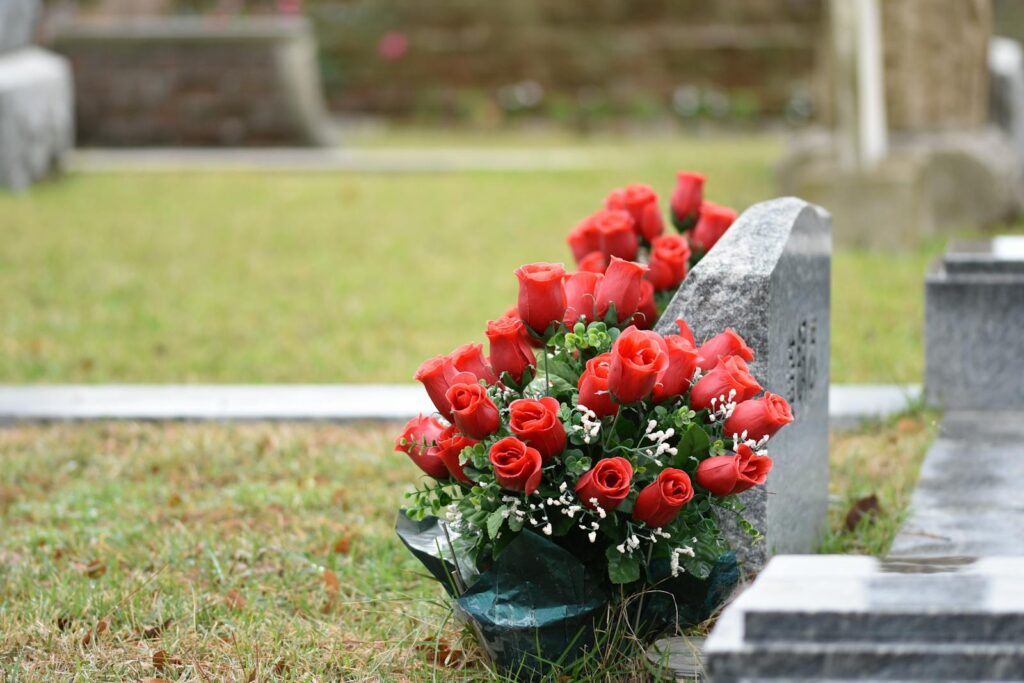
Across the world, every culture has its own way of saying goodbye. While the details may differ – from quiet moments of reflection to vibrant celebrations of life – the purpose remains much the same: to honour a loved one, to acknowledge loss, and to support those who are grieving.
At C V Gower Funeral Directors, we understand that there is no single “right” way to hold a funeral. For over 90 years, as a family-run funeral directors serving North Somerset, we have supported families from many different backgrounds. Taking time to learn about global funeral customs not only broadens our understanding, but also reminds us of the shared humanity that connects us all.
In this article, we gently explore how different cultures approach funerals, reflecting on the importance of ritual, remembrance, and respect.
Why Funeral Rituals Matter
Funerals are far more than formalities. Across cultures and throughout history, they have played an essential role in helping people process grief and begin to adjust to life after loss. Research and cultural studies, including insights shared by National Geographic, highlight how rituals provide structure at a time when life can feel uncertain and overwhelming. They bring communities together, offer comfort, and create space to remember and honour the person who has died.
It’s natural to feel lost when someone close to us passes away. Rituals – whether religious prayers, shared meals, music, or symbolic gestures – can offer reassurance and meaning. They help us express emotions that may otherwise feel difficult to put into words.
Although customs vary widely, the intention behind them is often the same: love, respect, and remembrance.
Funeral Traditions in Europe
Across Europe, funeral traditions are often shaped by Christian heritage, though modern ceremonies increasingly reflect personal beliefs and individual wishes.
In the UK, many funerals follow a familiar structure: a service in a church, crematorium, or cemetery chapel, readings and hymns chosen by the family, and a gathering afterwards to share memories. Black clothing is traditionally worn as a symbol of mourning, though some families now request brighter colours to celebrate a loved one’s life.
In Ireland, the custom of a wake remains an important part of the grieving process. Family and friends gather, often in the home, to sit with the person who has died, share stories, and support one another. While it is a solemn occasion, it can also be warm and communal, reflecting the closeness of family ties.
In parts of Eastern Europe, extended mourning periods are observed, with memorial services held weeks, months, or even a year after the funeral. These ongoing rituals highlight that remembrance does not end with the day of the service.
Across Europe, we can see a balance between tradition and personalisation – something many families in the UK value today.
Traditions Across Asia
Asia is home to a rich tapestry of funeral customs, deeply influenced by religious beliefs such as Hinduism, Buddhism, Islam, and Confucian traditions.
In Hindu communities, cremation is common, symbolising the release of the soul. Ceremonies often take place quickly after death, with prayers and rituals performed by family members. Ashes may be scattered in a sacred river, reflecting beliefs about the cycle of life, death, and rebirth.
In Japan, where Buddhist practices are widely observed, funerals often include a wake, a cremation, and a formal ceremony where incense is offered. Family members may keep a home altar to honour their loved one, maintaining an ongoing connection through daily remembrance.
In parts of China, funerals may include symbolic offerings, such as paper items representing money or possessions, which are burned to provide for the person in the afterlife. White is traditionally worn as a colour of mourning, contrasting with the black attire commonly seen in Western countries.
These traditions remind us how beliefs about the afterlife, ancestry, and family duty shape the way grief is expressed.
Customs in Africa
Africa is a vast and diverse continent, and funeral customs vary greatly between regions and communities. However, in many African cultures, funerals are significant communal events.
In Ghana, for example, funerals can be elaborate and vibrant, sometimes lasting several days. Music, dancing, and storytelling may all play a part, celebrating the life and achievements of the person who has died. In some communities, uniquely crafted coffins are created to reflect the individual’s profession or passions – a powerful expression of personal identity.
Elsewhere, ancestors are honoured through ritual and prayer, reflecting a belief that those who have died continue to play a role in family life. These practices highlight the importance of community, continuity, and respect for those who have gone before us.
For some readers, these customs may feel very different from what we are used to in the UK. Yet at their heart lies a familiar desire: to come together, to grieve openly, and to honour a life lived.
The Americas: From Solemn to Celebratory
Across North and South America, funeral traditions reflect a blend of Indigenous beliefs, European influences, and modern practices.
In Mexico, Día de los Muertos (Day of the Dead) is a well-known tradition that honours loved ones who have died. Families create colourful altars decorated with photographs, candles, and favourite foods. Rather than focusing solely on sorrow, the occasion celebrates life and cherished memories. It is a reminder that remembrance can be joyful as well as reflective.
In the United States and Canada, funeral practices are diverse. Services may be religious or non-religious, formal or highly personalised. “Celebrations of life” have become more common, focusing on storytelling, music, and shared experiences rather than solely on mourning.
Across Latin America, Catholic traditions often shape funeral rites, including prayers, Mass, and anniversaries of death marked by family gatherings.
These contrasts between solemn reflection and vibrant celebration show that grief is deeply personal. There is no single way to express love or loss.
How Migration Has Shaped Funerals in the UK
The UK is a wonderfully diverse society, enriched by communities from around the world. As families have settled here, they have brought their cultural and religious traditions with them.
Today, funeral directors are often called upon to accommodate a wide range of practices – from specific burial requirements in Muslim and Jewish faiths to Hindu cremation rituals or Christian Orthodox ceremonies. Some families may blend traditions, reflecting both their heritage and their life in Britain.
At C V Gower, we are experienced in working closely with families of many different backgrounds. We understand how important it is that a funeral respects religious beliefs, cultural customs, and personal wishes. Whether arranging a traditional service, a non-religious ceremony, or supporting specific cultural practices, we guide families with sensitivity and care.
During difficult times like these, it can bring comfort to know that your traditions will be honoured with dignity and professionalism.
Learning with Sensitivity and Respect
Exploring funeral customs from around the world can be enlightening. It encourages empathy and helps us appreciate the many ways people find meaning in loss.
However, it is important to approach these traditions with respect. What may seem unusual at first glance often carries deep spiritual or cultural significance. When considering incorporating elements from another culture into a funeral, families may find it helpful to reflect on the meaning behind the practice and ensure it is done thoughtfully and appropriately.
Funeral directors play an important role in offering guidance, ensuring that services are both respectful and meaningful.
A Shared Human Experience
While customs differ – from quiet candlelit vigils to lively processions filled with music – the emotions behind them are universal. Love, grief, remembrance, and the need for community connect us all.
It’s natural to seek comfort in tradition, whether that tradition stretches back generations or is newly created to reflect a unique life. Many families find that personal touches – favourite songs, meaningful readings, or symbolic gestures – help create a farewell that truly honours their loved one.
If you would like guidance on arranging a funeral that reflects your cultural background, religious beliefs, or personal wishes, our compassionate team at C V Gower Funeral Directors is here to support you. As a trusted, family-run funeral directors serving North Somerset for over 90 years, we are committed to providing personalised funeral services with care, transparency, and respect.
Every life is unique. Every farewell should be too.
Planning Ahead: Why Consider a Prepaid Funeral Plan?

Losing someone we love can be one of life’s most difficult experiences, made all the more challenging when practical decisions and financial considerations are left to family at a time of grief. Planning ahead with a prepaid funeral plan offers a thoughtful way to ease both emotional and financial burdens, ensuring your wishes are honoured and giving you and your family reassurance for the future.
In this guide, we explain what a prepaid funeral plan is, how it works, and why so many people choose to take control of their arrangements in advance.
What Is a Prepaid Funeral Plan?
A prepaid funeral plan is an arrangement that allows you to pay for some of your funeral costs in advance, securing the services of a funeral director and other essential elements long before they are needed. It lets you decide key aspects of your funeral, such as the type of service, choice of coffin, and who you’d like to carry out your arrangements, while relieving your loved ones of the financial burden at an already emotional time.
Rather than leaving everything for your family to organise when you die, a prepaid plan means many of the practical decisions are already made in accordance with your wishes. A funeral plan is not an insurance policy, but a prepaid service that helps manage funeral director costs and key elements of the funeral itself.
How Do Funeral Plans Work?
When you take out a prepaid plan, you choose the level of funeral service you want and agree to pay for it either in a single payment or over affordable monthly instalments. When the time comes, the funeral plan provider and selected funeral director take care of the arrangements in line with the plan you set up.
Fundamentally, a funeral plan will cover the funeral director’s services, which might include:
- The collection, care and preparation of your loved one
- A coffin of your choice
- Funeral director arrangements and professional services
- Administrative tasks required to organise the funeral
Some plans also include allowances towards third-party costs, such as cremation or burial fees, and fees for celebrants or ministers. However, not all funeral plans cover every possible cost (for example, cemetery charges, floral tributes or memorial stones often fall outside the plan). It’s always important to check exactly what is included.
Financial Benefits: Locking in Today’s Prices
One of the most compelling reasons people choose a prepaid funeral plan is the financial certainty it provides. Funeral costs have been rising steadily, and by paying in advance you can lock in today’s prices, potentially saving money over the long term. This can be especially reassuring if you pay in instalments, helping spread the cost and offering protection against future price increases.
Without a plan, your family may face a substantial bill at a time when they are least prepared for it. Prepayment means those costs are already taken care of, easing pressure on loved ones and enabling them to focus on emotional support and remembrance.
Emotional Reassurance for Loved Ones
Funeral planning isn’t just about money. It’s also about peace of mind — for you and for those you care about. Knowing that your funeral arrangements and wishes are set out clearly can offer comfort to family members, removing uncertainty and potential disagreements when emotions are running high.
For many families, the months following a bereavement are emotionally intense. Preplanning a funeral means that your loved ones won’t have to guess your preferences or hastily organise arrangements while grieving. Instead, they can lean on the clear guidance you’ve provided, supported by professionals who understand your wishes.
Flexibility and Personalisation
Contrary to common belief, funeral plans aren’t rigid. Many offer flexibility so you can personalise your service to reflect your personality, values and preferences. Whether you’re drawn to a traditional funeral with friends and family present, a simple cremation, or something unique and meaningful, a plan can be tailored to suit.
One of the strengths of reputable providers, such as Golden Charter, is that they offer a range of plans to match different needs and budgets — from basic direct cremation plans to more comprehensive traditional services with added choices.
Additionally, plans can usually be updated if your wishes change, and if you move home your plan can often be transferred to a funeral director near you.
FCA Regulation: Added Protection for Your Money
Until recently, funeral plans in the UK operated in a largely unregulated landscape. That changed in July 2022, when prepaid funeral plans became fully regulated by the Financial Conduct Authority (FCA). This means that any provider or intermediary selling these plans must be authorised and meet strict standards designed to protect your interests.
FCA regulation requires providers to act fairly, manage funds responsibly, and be transparent about what plans cover. Importantly, if a plan provider fails financially, customers of authorised firms may have access to the Financial Services Compensation Scheme (FSCS) and the Financial Ombudsman Service, depending on the circumstances — offering an additional layer of security.
This regulatory framework helps guard against the sort of distressing situations seen in the past, such as the collapse of some unregulated providers before the FCA rules came into force, which left many people uncertain about the future of their plans.
When considering a funeral plan, it’s wise to check that the provider is FCA-authorised, as this ensures you benefit from these protections.
How to Choose a Reputable Provider
With funeral plans now regulated, choosing a trusted provider is easier — but it still deserves careful thought. Here are a few tips:
- Check FCA authorisation: Use the Financial Conduct Authority’s firm checker to confirm the provider and intermediary are authorised to sell and administer funeral plans.
- Understand what’s included: Compare plans to see exactly which services and costs are covered, and what might be excluded.
- Look for local support: Many people find comfort in being supported by funeral directors who are part of their community.
- Ask about flexibility: Your circumstances and wishes may change over time, so ensure the plan can be updated if needed.
- Read reviews and ask questions: Hearing from other customers and clarifying details up front helps build confidence.
Golden Charter Funeral Plans with C V Gower
At C V Gower Funeral Directors, we understand the value of planning ahead with compassion and clarity. That’s why we’re proud to offer Golden Charter prepaid funeral plans, designed to help you take control of your arrangements now, so your loved ones don’t have to later.
Golden Charter has supported millions of families across the UK with trusted funeral planning for more than 35 years, providing a range of plans to suit different needs and budgets. As part of this service, we offer personalised guidance and support every step of the way — from choosing the right plan to ensuring your wishes are understood and respected.
Whether you’d like a simple cremation plan, a traditional funeral service, or something uniquely meaningful, we can help you explore your options and explain how each plan works. Paying in advance helps lock in funeral director costs at today’s prices and gives you and your family invaluable peace of mind.
Final Thoughts
Making funeral arrangements in advance with a prepaid plan is a thoughtful and practical choice that can bring clarity, reassurance and financial peace of mind to you and your family. By planning ahead, you protect your loved ones from difficult decisions during a time of grief and ensure your wishes are known and honoured.
If you’re considering a prepaid funeral plan and want compassionate, personalised guidance, please get in touch with C V Gower. We’re here to support you with warmth, experience and understanding — helping you plan ahead with confidence.
Poems To Read At A Funeral

When someone we love dies, it can be hard to find the right words. Grief brings a depth of emotion that often feels too vast or delicate to express in ordinary language. In these moments, many families turn to poetry. Whether shared aloud during a service or quietly included in an order of service, a poem can speak to the heart in a way that feels both comforting and timeless.
At a funeral, a carefully chosen poem can become a final gift. It is a tribute that captures something true about the person we are remembering, or something honest about how we feel in their absence. Some poems offer reassurance, others invite reflection. Some bring tears, while others help us smile through them. Whatever the tone, poetry offers space to grieve, to celebrate, and to connect.
Why Poems Are Chosen for Funeral Services
There are many reasons why poetry is often chosen for funerals. Its rhythm and imagery can gently carry meaning, even when emotions are raw. For some, a poem helps say what they themselves might struggle to voice. For others, it becomes a way to honour the personality, values or spirit of the person who has died, particularly when the poem reflects their faith, beliefs or sense of humour. In a setting that can feel overwhelming, poetry can also offer moments of stillness and calm, creating space for reflection.
Traditional, Spiritual, Modern and Uplifting: Different Styles of Funeral Poetry
Families often choose from a wide range of styles when selecting a poem. Traditional pieces have stood the test of time, offering familiar and graceful words that many people recognise. A poem like “Do Not Stand at My Grave and Weep” by Mary Elizabeth Frye continues to bring comfort through its quiet assurance that a loved one is still present in the world around us. “Crossing the Bar” by Alfred, Lord Tennyson is another well-known choice, often read for its serene portrayal of death as a final journey.
Others may be drawn to spiritual or faith-based verses, particularly when seeking comfort in the belief that their loved one’s soul continues. The 23rd Psalm, “The Lord is My Shepherd”, often read as a poem, remains a deeply comforting choice for Christian services. Similarly, Canon Henry Scott-Holland’s “Death Is Nothing at All” offers reassurance that love and connection remain, even when someone is no longer physically with us.
For those who prefer a more contemporary or personal tone, modern funeral poems often use everyday language to explore memory, loss and love. “Remember Me” by Margaret Mead is one such example. It is a gentle reminder that the impact of a life well-lived continues long after someone has gone. Another frequently chosen piece is “He Is Gone”, sometimes attributed to David Harkins, which reflects on how someone’s presence remains through the way they touched others’ lives.
Not every poem at a funeral needs to be sombre. In fact, some families find great comfort in choosing something uplifting or hopeful. A poem that reflects their loved one’s positive spirit or encourages those present to remember the good times can be just as meaningful. “Afterglow” by Helen Lowrie Marshall invites us to smile at the memories shared, rather than dwell in sadness. “The Dash” by Linda Ellis reminds us that what matters most in life is not the date of our birth or death, but the life we live in between.
Finding the Right Poem for a Loved One
Choosing the right poem can take time, especially when emotions are close to the surface. Sometimes, a single line resonates so deeply that it becomes the centrepiece of the service. Other times, the search becomes part of the grieving process. It can be a way of reflecting on who the person was and how they should be remembered.
Families may start by thinking about the person’s character. Were they gentle and thoughtful? Spirited and joyful? Did they enjoy literature, or perhaps have a favourite poem or song lyric? Asking these questions can help guide the choice.
It is also important to consider how the poem will be shared. Some are read aloud by a celebrant or minister, while others are spoken by a friend or family member. A short poem can often be just as powerful as a longer reading, particularly if the speaker is nervous or emotional. In some cases, the poem may simply be printed in the service booklet for private reflection.
Poems Are Not the Only Option
While poetry can be a beautiful and fitting tribute, it is not the only way to honour someone’s memory. Some families choose to share personal tributes, offering spoken memories or stories that capture a person’s life in their own words. Others may include meaningful passages from books, letters, or faith texts. Music is another deeply personal choice. A favourite song, a gentle hymn, or even a single line of lyrics can carry powerful emotional weight. Whatever is chosen, the most important thing is that it feels right and speaks to the life lived and the love felt.
How C V Gower Can Help You Create a Personal Tribute
At C V Gower Funeral Directors, we understand how much these personal touches mean. For many families, choosing a poem, a song, or a reading is one of the ways they begin to shape a meaningful farewell. It becomes a ceremony that reflects not only the person who has died but also the people who loved them.
With over 90 years of experience supporting families in North Somerset, we are here to help you explore those options gently and without pressure. Whether you already have something in mind or need help finding inspiration, we can guide you through the process and suggest poems or readings that reflect your wishes and values.
A Final Thought on the Comfort of Words
Planning a funeral is never easy, but moments of beauty and connection can still be found in the choices we make. The words we say, the memories we share, and the ways we choose to remember all play a part in honouring a life.
Poetry has long been a companion to grief. It offers comfort, dignity, and sometimes even hope. For many, reading a poem at a funeral becomes more than just tradition. It becomes a way of keeping love alive through language.
If you are considering a poem for a funeral or would like guidance on how to create a personal and heartfelt ceremony, please do get in touch with our team at C V Gower. We are always here to help, with compassion, understanding, and a commitment to making each farewell as individual as the person it honours.
Who Decides Who Can Attend a Funeral?

When someone close to us dies, arranging their funeral is one of the most personal and emotional responsibilities we may ever face. In many cases, it’s a chance to honour their life and legacy with warmth and dignity. However, at a time already filled with grief, difficult questions can arise, particularly around who has the legal right to make decisions about the funeral, including who should attend.
At C V Gower Funeral Directors, we understand that navigating these decisions can be overwhelming. With over 90 years of experience supporting families throughout North Somerset, we’re here to guide you with care, compassion and practical advice, especially when tensions or uncertainties arise.
Who Has the Right to Arrange a Funeral?
In the UK, the legal right to arrange a funeral does not automatically belong to the closest family member. The responsibility is usually determined by whether or not the person who has died left a will.
If there is a valid will, the person named as the executor has the legal authority to make funeral arrangements. This includes choosing the funeral director, deciding on burial or cremation, and arranging the service. Importantly, the executor also has the final say on who is invited to or permitted to attend the funeral. They may choose to consult with the family and involve others in the planning, but legally, they are not required to do so.
If there is no will, the person is considered to have died intestate. In this case, responsibility typically falls to the next of kin, beginning with a spouse or civil partner, followed by children, parents, siblings and then more distant relatives. The individual who takes legal control of the estate, usually through applying for letters of administration, will also take on the responsibility of arranging the funeral.
Who Decides Who Can Attend?
Most funerals in the UK are open to the public. This means anyone who wishes to attend may do so, unless the person arranging the funeral has chosen to make it private. A private funeral is by invitation only, and the organiser has every right to keep details such as the date, time and location confidential.
If the funeral is private, those not invited may understandably feel hurt or excluded. But while this can be painful, it is within the organiser’s rights to restrict attendance. There may be valid personal reasons behind this choice, including the desire for a quiet, intimate goodbye or a wish to avoid potential conflict.
What Happens When Families Disagree?
Unfortunately, disputes over funeral arrangements can and do happen. Grief can heighten emotions, and if relationships have been strained, decisions about the funeral, especially who is involved or invited, can become points of tension.
Common situations include disagreements between divorced or estranged family members, children feeling excluded from plans, or new partners and stepfamilies being left out of the arrangements. In these moments, emotions often run high, and it’s easy for misunderstandings to grow.
Legally, however, the executor or the person responsible for the estate, if there is no will, has the final say in all matters relating to the funeral. If others strongly object to decisions being made, their options for legal challenge are limited and often difficult to pursue. The courts are typically reluctant to intervene in funeral disputes unless necessary, and even then, resolution can take time and cause further distress.
Finding Resolution Through Support and Mediation
At C V Gower, we often support families through these delicate situations. We know that clear, calm communication can make a real difference. When misunderstandings arise, we offer a neutral, compassionate space where concerns can be heard and discussed. Our role is to guide, not to take sides, and to help ensure that decisions are made respectfully, with the person who has died at the heart of every conversation.
We also provide practical advice about the legal responsibilities of executors and next of kin, and we can support families in exploring alternative options, such as holding a memorial service at a later date if some individuals are unable to attend the main funeral.
Private or Public: Choosing the Right Type of Service
Deciding whether to hold a public or private funeral is a personal choice. Public funerals allow friends, extended family and members of the wider community to come together and pay their respects. These services are often announced in local newspapers or online, allowing anyone who knew the person to attend.
Private funerals, on the other hand, are kept more intimate. They may be chosen for a variety of reasons, including personal preference, cultural tradition or simply a desire for privacy. In some cases, a private funeral is followed by a larger memorial gathering, offering a separate opportunity for those not invited to the funeral itself to say goodbye.
Whatever the choice, we believe the most important thing is that the service feels meaningful and respectful. At C V Gower, we help families explore all options, making sure each decision reflects their wishes and those of the person who has died as closely as possible.
Planning Ahead to Avoid Disputes
One of the most effective ways to prevent conflict is through planning. A pre-paid funeral plan allows you to outline your wishes in advance, giving your family clarity and guidance when the time comes. You can choose the type of service you would like, who you’d like to be involved, and whether you would prefer a public or private funeral.
Having a plan in place removes much of the uncertainty for loved ones, easing emotional burdens and helping avoid disagreements at an already difficult time.
At C V Gower, we offer fully personalised pre-paid funeral plans. These not only allow you to take control of your future arrangements but also ensure that your family is supported with the same care and compassion we bring to every funeral we arrange.
A Trusted Hand During Difficult Times
The question of who can attend a funeral can stir up strong emotions, particularly when families are grieving and decisions are being made quickly. While the legal responsibility rests with the executor or next of kin, we believe that thoughtful, compassionate guidance can help ensure that arrangements are handled with care and dignity for all involved.
If you’re navigating funeral arrangements and facing difficult decisions, or if you’re thinking ahead and would like to put plans in place, we’re here to help. With decades of experience and deep ties to the local community, C V Gower Funeral Directors is committed to supporting families with empathy, professionalism and respect every step of the way.
To speak with our team or learn more about how we can support you, please don’t hesitate to get in touch. We’re always here to listen and to help you find the right path forward.